

Why is Tamil Nadu plunged into darkness due to frequent power outages?
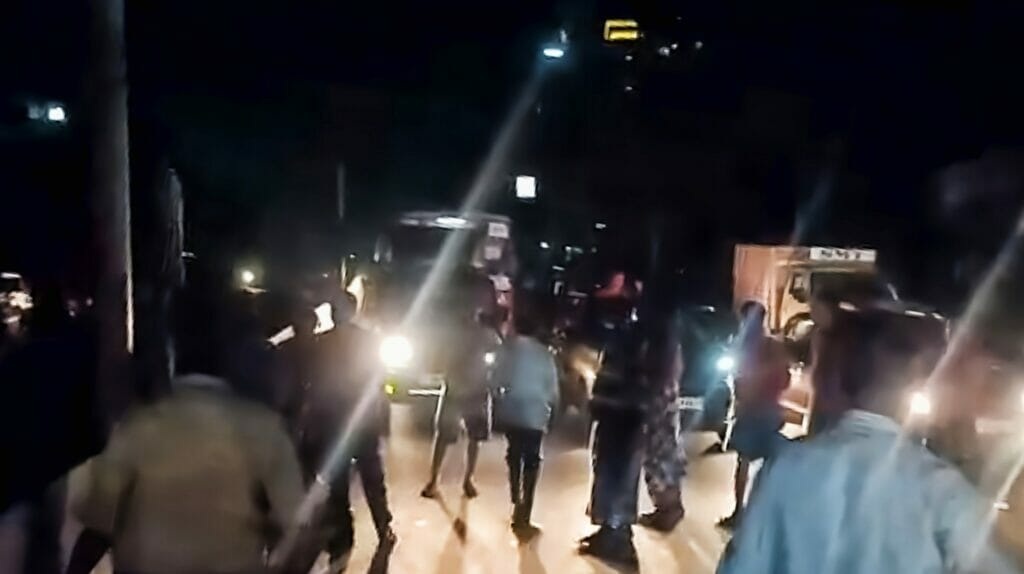
In the last several weeks, the people of Tamil Nadu have been severely affected by the frequent and unannounced power outages. Especially in places like Chennai and its suburban areas, people have taken to the streets to protest against power cuts that occur for 5-6 hours every day. Unable to sleep at night as a consequence, people carry their children, besieging the offices of the Electricity Board and the houses of MLAs, with videos of their confrontations being broadcast on news channels.
Power interruptions have been occurring not only in Chennai and its surrounding areas, but also in various parts of Tamil Nadu. Cities like Arani in Thiruvannamalai district and Chinnayachathiram in Pudukottai have become hotspots for people’s protests, extending beyond cities into rural areas as well—where power interruptions have caused massive harm to everyday life. Pudukkottai district in particular, has witnessed a disruption in water supply due to a power outage, causing severe hardship to its local residents.
Micro and small enterprises have also been greatly affected due to these power outages, where power interruptions lasting even for a small amount of time can result in high costs. If the production lines of these small enterprises halt midway, it can affect or compromise the overall quality of their manufactured products. If the CNC machines, tools, and similar equipment used in these processes stop running, they must be tapped in and reconfigured again.
Due to the aforementioned reasons, the enterprises consistently struggle to attain their production goals as well as trade their commodities to customers within the stipulated time. Often, there is also a possibility of losing available customers. If they decide to purchase generators to keep up with their business amidst power interruptions, the cost of the diesel required to run the generators burdens the micro and small entrepreneurs further.
Trade unions of micro and small-scale manufacturers have been conveying their concerns regarding this to the government. For those already pushed to the brink of being unable to run their businesses due to rising electricity charges, the power interruptions have fallen like a sudden, devastating blow to their livelihoods. The Southern India Mills’ Association (SIMA) has urged the state government to take immediate action to address the power outages affecting textile mills.
Besides urban residents and micro-small entrepreneurs, the rural population has also been severely impacted by the power interruptions. The situation in rural areas is already dire due to a lack of sufficient rainfall, the failure to open the Mettur dam on time, and groundwater scarcity causing crops to wither and resulting in losses. Now, it has further worsened due to the unavailability of three-phase electricity. Farmers have expressed concern that the Kuruvai paddy cultivation will suffer a heavy blow this year. As a result, rice prices will skyrocket, and the burdens will ultimately fall upon the working people!

The Mutual Accusations between the DMK and the TVK
Amidst ongoing demands, condemnations, and road-blockade protests from various quarters regarding power outages, the DMK has been campaigning that the real issue stems from “the administrative incompetence of the TVK government.” The former Electricity Minister V.Senthilbalaji (of DMK) stated that TVK lacks administrative skills and that its ministers do not appear to have a complete understanding of their respective portfolios. He further added, “During the DMK’s tenure, there was uninterrupted power supply even during the peak electricity demand of summer—specifically, even when the requirement was 21,000 MW per day.”
On the other hand, the TVK government claims that the opposition parties’ “conspiracy” is the reason for the power outages. TVK MLA Pallavi openly alleged that Electricity Board employees supporting the DMK are deliberately cutting off the power supply. TVK Electricity Minister C.T Nirmal Kumar went a step ahead and claimed that “a few people intentionally steal electric fuses in a planned manner, causing power interruptions.” He presented CCTV footage as evidence to support his claim, showing two individuals arriving on a two-wheeler in broad daylight and stealing the fuse from a house’s electricity connection in the Avadi area of Chennai.
Does it make sense to blame the rooster for the sunrise? Then similarly, what connection is there between a theft of fuse carriers from houses during the day and power outages in most homes at night?! The Minister did not feel the slightest fear for being exposed by this simple truth while saying this. These very people were the ones who successfully campaigned that “Vijay’s delay was not the cause” of the 41 deaths in Karur, but rather a “DMK conspiracy” which caused it, firmly believe that the public will believe whatever they say!
Therefore, Minister Nirmal Kumar’s claim that the power outage was caused by a conspiracy hatched by opposition parties is a blatant lie. At the same time, the assertion by opposition parties including the DMK, who state that the power cut was due to TVK’s administrative incompetence is only a half-truth. If so, what is the actual reason?
So, what is the real reason for the power cuts?
Typically, during the summer season, the state’s electricity demand rises extensively. Consequently, power shortages occur, leading to power cuts. However, there is currently no electricity shortage across the state. Tamil Nadu’s average daily electricity demand is 17,000 megawatts. During the summer months, however, this demand can peak at up to 21,000 megawatts per day. The Tamil Nadu government procures this electricity from state-owned power plants, the central pool, and private power plants. Therefore, there is currently no electricity shortage in Tamil Nadu.
Even when there is an adequate supply of electricity, disruptions in the distribution network prevent it from reaching the public. Interruptions in power distribution are caused by factors such as dilapidated infrastructure, faults in power lines, delays in maintenance work, and staff shortages.
Speaking on this matter, T. Jayasankar, State General Secretary of the Central Organization of Tamil Nadu Electricity Employees (COTEE), stated that there are two main reasons behind the increasing power supply disruptions. Firstly, the necessary maintenance work for the power distribution infrastructure has not been carried out properly over the past seven years. Secondly, the Electricity Board lacks the personnel required to perform these tasks.
The Tamil Nadu Electricity Board should have a total workforce of approximately 1.4 lakh employees, ranging from Junior Assistants to Senior Engineers. However, only 68,000 people are currently employed! In other words, there are about 70,000 (fully half) vacant positions!! It is practically impossible to maintain the state-wide power distribution infrastructure with such a limited workforce. Jayasankar states that there are approximately 46,000 vacancies for linemen—the field staff responsible for addressing consumer complaints and carrying out maintenance work.
According to him, “A substation supplies electricity to more than forty areas through transformers, distribution lines, power distribution systems, and transmission cables. So, if a fault occurs in a distribution line at the substation and the power supply is interrupted, all the connected areas are affected. Often, fuses blow out, and faults occur in multiple locations simultaneously.”
Under normal circumstances, linemen would quickly identify and rectify every fault. However, due to the current staff shortage, difficulties have arisen in handling faults occurring at multiple locations simultaneously. The limited number of available staff makes it impossible to visit every location to carry out repairs. This leads to delays in restoring the power supply, resulting in a situation where people have to suffer without electricity for extended periods.
This is not a situation unique to the present day. In the past, too, the sudden surge in electricity consumption during the summer months frequently caused power distribution equipment to malfunction or fail, unable to withstand the increased load. Authorities used to manage such situations by deploying additional personnel from other districts to urban centers like Chennai, Madurai, and Coimbatore. Parties such as the DMK and AIADMK criticize the TVK government by claiming it lacks administrative competence, arguing that it does not know how to resolve issues—unlike the conventional approach of merely patching things up to sweep problems under the rug!
Administrative incompetence may well have exacerbated this crisis. However, the failure to fill vacancies over the past seven years, the reduction in maintenance costs, and the reliance on contract labor are not merely the errors of a single year or a single administration; they are the consequences of long-term policy decisions aimed at restructuring the Electricity Board along the lines of privatization to pave the way for private investment.
Why have the vacancies not been filled?
It cannot be said that mere negligence, the inattention of officials and ministers, or corruption are the sole reasons for such a massive staff shortage. After all, the Electricity Board administration and the government are well aware of how many employees retire each year and how many to be recruited to replace them. Yet, the Electricity Board has been pushed into this situation precisely because permanent vacancies have not been filled systematically over the years. Accidents occur frequently because a small number of workers are forced to carry out these extremely arduous and dangerous tasks. Workers perish unattended like crows or sparrows, and their families are left destitute.
There is a severe shortage of field personnel, such as linemen, technical assistants, and junior engineers who form the backbone of the power distribution system. These personnel are responsible for maintaining power lines, transformers, and substations, as well as rushing to the site to restore power whenever a fault occurs. A reduction in their numbers causes even minor faults to escalate into prolonged power outages.
The trend of relying heavily on contract workers instead of recruiting permanent staff has further exacerbated this issue. Contract workers often have to work under conditions characterized by low wages, a lack of job security, and inadequate training. Consequently, employee unions have consistently maintained that the continuous maintenance of the power distribution system and emergency repairs can be effectively carried out only by experienced permanent staff. Why, then, are governments reluctant to fill these vacancies?
The fundamental objective of the privatization reforms consistently pursued by both central and state governments in the Indian power sector over the past three decades is to transform electricity from a public service into a revenue-generating sector. Recommendations are continuously being put forward to cut the costs of state Electricity Boards, reduce subsidies, decrease the number of permanent employees, and outsource various tasks—including maintenance, to private contractors.
New staff recruitment and maintenance activities are the first to be affected by these ‘cost-cutting’ measures. This is because they do not generate immediate revenue; however, in the long run, their role in ensuring the reliability of the power distribution system is invaluable.
The consequence of the path of privatization
In line with the policies of globalization, privatization, and liberalization (LPG) implemented in the 1990s, the electricity sector was ‘unbundled’ into three distinct segments—generation, transmission, and distribution. This happened to allow an increase of private investment; alongside restructuring the Electricity Boards to suit the model with the government gradually withdrawing from the sector.
The Electricity (Amendment) Act of 2003 and subsequent power sector reforms implemented by central governments drove policies such as cost-cutting, organizational restructuring, and contractualisation, all in the name of improving the financial health of state Electricity Boards. Following this, the UDAY scheme, introduced in November 2015, compelled state Electricity Boards to implement yet another round of cost-cutting measures under the pretext of rescuing them from financial losses.
As part of this trend in Tamil Nadu, measures to control maintenance costs by reducing the number of permanent employees and expanding the contract-based workforce began to gain momentum. As a result, the entire power distribution infrastructure has been steadily weakening.
Why is the government weakening the State Electricity Board in this manner?
If a public sector undertaking is weakened, people start to believe that “the government is incapable of running it.” Moreover, lackeys of privatization and the media can easily shape public opinion to argue that the government lacks competence and is riddled with corruption, and that handing the entity over to the private sector is the only solution. We can already see this sentiment emerging on social media, with many people in Chennai saying, “I am willing to pay any amount, just provide me with uninterrupted electricity.”
This is precisely what happened with BSNL. Before private players like Airtel and Jio entered the telecommunications sector, BSNL reigned supreme. Possessing a vast infrastructure that included telecom towers across the country, BSNL was crippled to serve the interests of private players. While private competitors advanced rapidly through successive technological upgrades moving from 3G to 4G, BSNL was denied permission for 3G technology, effectively hobbling its progress. Under the guise of cutting costs, the sector engaged in continuous downsizing, and the majority of employees were removed through forced retirement. Due to this, the telecommunications sector has today become a hunting ground for private corporate owners; they dictate the tariffs, and the situation is such that no one can intervene.
Delhi serves as a prime example of the privatization of electricity distribution. Until 2002, the Delhi Vidyut Board, a government-run entity, handled the city’s power distribution. However, much like the current situation in Tamil Nadu, the board faced a barrage of complaints regarding frequent power outages, the lethargy of staff in addressing issues, and poorly maintained infrastructure. As a result, the State Electricity Board was dissolved, and Delhi’s electricity distribution was split among six different companies. Currently, electricity distribution and service maintenance operations in Delhi are carried out by private companies (such as BSES Rajdhani and Tata Power).
Even though governments claim that power outages decreased after the privatization of electricity distribution, electricity tariffs continued to rise. Today, Delhi has become one of the states with the highest electricity charges in the country. Tamil Nadu, too, has been moving in the same direction over the past several years.
In other words, in order to hand the PSU’s over to private corporates, both the state and central governments are destroying them!
What is the reason for the Electricity Board’s loss?
Under the Electricity (Supply) Act of 1948, electricity was viewed not as a profit-driven commercial commodity, but as a public service to be provided to the people at an affordable price. Thereby, the government largely undertook all aspects of electricity generation, transmission, and distribution. Even though electricity was supplied at low rates to farmers, poor, and small-scale industries, state Electricity Boards generally did not operate under financial distress. On the contrary, they ran with profits!
A fundamental shift in this situation occurred only after the adoption of the globalization, liberalization, and privatization policies recommended by the World Bank in the 1990s. Instead of investing in state-owned power plants, a policy to encourage private power generation was adopted. The Electricity Act of 2003 was enacted to provide the legal framework for this shift. Subsequently, the share of private power producers grew rapidly; today, private companies account for more than half (52%) of the country’s total power generation.
Thus, state Electricity Boards were forced to purchase electricity from private companies instead of generating it themselves. This significantly impacted the financial health of the Electricity Boards.
The impact of this is clearly evident in Tamil Nadu. Currently, approximately 75 percent of the Tamil Nadu Generation and Distribution Corporation’s (TANGEDCO) total revenue is spent solely on electricity procurement. In the 2024–25 fiscal year, out of a total revenue of around ₹1,00,417 crore, ₹75,960 crore was spent on purchasing electricity. The primary cause of the Electricity Board’s financial crisis is neither free electricity nor employee wages; rather, it is the compulsion to purchase electricity from private companies at high prices.
TVK’s Nirmal Kumar and others argue that the losses are due to corruption committed by the previous DMK government—such as in the procurement of transformers and so on. Yet, even in that context, they gloss over the role played by bureaucrats. We do not deny that corruption by politicians and officials contributes to the losses; however, that accounts for only a small fraction. The primary reason is the purchase of electricity from private entities at exorbitant prices!
Furthermore, under power purchase agreements (PPAs) with private power generation companies, governments are required to pay not only for the electricity actually procured but also for fixed charges and capacity (or capital) charges. In many of these agreements, these charges must be paid even if the contracted volume of electricity is not fully purchased. Consequently, the cost of power procurement continues to rise, further increasing the financial burden on Electricity Boards.
At the same time, the government’s own power generation capacity has not been expanded as planned. Since there has been no significant increase in state-owned power generation capacity over the past several years, a situation has arisen where there is an increasing reliance on private companies to meet the ever-growing annual demand for electricity. This has led to the costs and losses incurred by Electricity Boards to rise year after year.
Privatization policies are the very reason for the Electricity Board’s losses and the current deterioration of the power distribution infrastructure! Yet, the TVK government claims it will implement this same policy more extensively and effectively, with transparency and without any corruption—to resolve the power outages facing the state!!
So, what is the real solution?
Merely transferring a few officials or carrying out emergency maintenance work in select areas is insufficient to resolve the power outages faced by the public. Thousands of vacancies that have remained unfilled for years must be filled immediately. Investment in maintenance operations needs to be increased. Reliance on the contract labor system should be reduced in favor of recruiting permanent technical staff. The Electricity Board should be viewed as an essential public service rather than being assessed solely on the basis of profit and loss.
Electricity is not merely another commodity to be sold in the market; like drinking water, education, and healthcare, it is a fundamental necessity of daily life. It is the policy of privatization transforming this public service into a profit-driven activity for corporate entities that has left people languishing in darkness today. There is no hope for those suffering in the dark unless the policy of privatization is uprooted entirely—not just from the darkness caused by power outages, but from all forms of darkness in life!
- Arivu
Originally published on July – August Senkanal Tamil magazine


