

NEP and Digitalisation of Education – Part II
In our previous essay “The disaster of On-Screen Marking – Part 1”, we had detailed out the corruption behind the CBSE-OSM scam and the role of CoEmpt Edutek in it.
The constant discussion point in the media has been regarding CoEmpt Edutek’s incompetence or the corruption of few politicians. They say that if a big, reliable IT firm like TCS were given the tender, this wouldn’t have been an issue. But nobody has questioned the idea of ‘digital evaluation’ itself. Why was digital evaluation brought in instead of the usual physical paper corrections in the first place? Why is CBSE going through the trouble of scanning 17 lakhs students’ answer sheets? Why did BJP digitize evaluation so urgently within one year of making the decision?
By engaging with these questions, we unveil the mystery behind one of the world’s largest digitalisation projects ongoing in our Indian education system, and for whom does this benefit?
Profiting from the Marketization of Evaluations
Marking consistency, faster evaluation, cost reduction of answer sheets’ transportation, fewer calculation errors, avoiding revaluation – these were the justifications provided by CBSE for implementing OSM. However, neither of these issues had ever been flagged as a major concern before, nor did OSM change that.
OSM is an important step towards privatization and digitalisation of the entire Indian education system and moulding it in service of the imperialist interest!
Assessments and evaluations are digitized as a ploy to replace teachers in their role as examiners by Artificial Intelligence (Ai) systems in the future. To do this, the Ai algorithm needs to be trained and tested on millions of answer sheets. But the process of producing usable data for this – scanning millions of answer sheets, bringing thousands of workers to annotate the data by evaluating the scripts – is notoriously difficult to due to the immense amount of time and labour it demands. The BJP Modi government devised a crooked scheme for this.

By implementing OSM suddenly, they brought in teachers under the guise of paper correction and were deceived into doing the hard labour of creating useful data. All these teachers spent day in and day out digitally drawing different rectangles for correct/wrong answer and marking according to answer key. The primary aim of this exercise is not evaluation at all, but the creation of big datasets for the use of Ai! The teachers were made to generate data to displace their own work by automation through Ai.
The vile motive behind this is to turn assessments, an integrated part of education process, into a separate market for the profit of private educational institutions and companies!
Data Colonialism in Education
The tender issued by CBSE explicitly asks the bidder for detailed data analytics reports on the student performance, correction mechanism and the conducting of the digital assessments itself. The tender mentions that this is for bettering further implementations of digital evaluation accordingly envisioned in the NEP 2020.
In one examination, the BJP-RSS government silently created big data on students. What is the use of collecting these various types of data if the schools are reported only on the pass percentages of the students? What else can be done with the data?
According to the bourgeoisie economists, “Data is the new oil of 21st century”. The implications of this statement are not widely understood. On the fake Independence Day of August 15, Modi has openly announced, “India is a data mine”, and we must make the best use of it. BJP’s ‘Digital India’ scheme is itself designed by the World Bank and IMF. Under the scheme, BJP has collected extremely sensitive data of people (PAN card, Aadhar Card) for the profits of the imperialists.
In this trend, educational data has become a market. Educational data, according to the bourgeoisie academicians, includes all data that is related to education such as, written, oral exams, answer sheets, attendance registry, projects, children’s demographic data, click event data when students choose an option on computer based tests (CBT), children’s eyeball movement data when they are reading content from screen, students’ social media data and many more minute data that can be collected on any individual children.
Answer scripts are important to measure the learning outcomes of students through data analysis. Detailed analysis of students’ learning outcome status as a whole, every individual student’s outcome, defects in attaining these outcomes, can be measured only through such data analyses.
BJP has established multiple bodies and developed various ways to collect students’ data such as UDISE+ (EMIS), APAAR ID, NDEAR, VSK, PARAKH, DIKSHA, NISHTHA, SWAYAM, TAMANNA, all of which collects students’ identity, demographic data (caste, gender, etc) and the following data is collected ‘legally’ in addition:
| System | Description | Data Collected |
|---|---|---|
| UDISE+ | Unified District Information System for Education Plus – EMIS – School, teacher and student information system | Collects attendance, enrolment, pedagogical activities, progression, assessment |
| PARAKH | Creates Holistic Progress Card (HPC) on students’ performance using Ai, conducts surveys to assess schools, district performance | Collects student, teacher, school questionnaire responses; student aspirations; grade 3,6,9 assessments; learning outcomes, cognitive processes: confidence, motivation, peer relationships; subject-wise, competency-wise results; portfolios, projects, co-curricular activities etc |
| APAAR ID | Automated Permanent Academic Account Registry to link academic history of students, collected through UDISE+, DigiLocker | Surveillance of students through Academic Bank of Credits (ABC) ID |
| DIKSHA | Online education platform | Collects click and tap data, learning activity data such as online course enrolment, completion, video viewing data, QR scanned, device data (eye movement) |
| TAMANNA | Try And Measure Aptitude And Natural Abilities – aptitude-assessment tool for Classes 9th and 10th – shared to schools, Career-guidance portals and apps, Databases, companies | Collects student response, aptitude results such as Language, Numerical, Spatial, Perceptual aptitude, Abstract, Verbal, Mechanical reasoning |
| VSK | Vidya Samiksha Kendra – Centralized dashboard for all the data collected above | UDISE+, DIKSHA, assessment platforms, state databases, government schemes, PM POSHAN, CWSN, at-risk cohort, dropout-risk alert, learning gap flag, attendance-low alert |
Recently, a controversy broke out when Sengottaiyan said that caste ID cards will be provided to students through APAAR ID. Many progressive liberals criticized it as a move towards reinstating caste untouchability. But the aim of APAAR ID is not just collecting caste information but minute data on students for analysis and surveillance.
The data, collected through the above mentioned organisations, can be used to make analysis on various levels, from micro level monitoring of individual student’s performance, attitudes towards authority, to macro level demography based patterns such as performance of children belonging to certain gender, caste etc, which can then be used to make “data-driven” policies such as, whether the State should shut down schools or colleges based on their “outcomes” of “skilled” students.
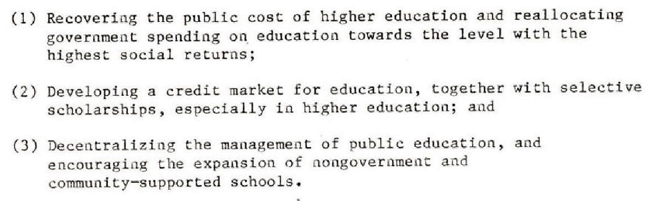
This is not an abstract and baseless conclusion, this is a clear instruction given by the World Bank, UNESCO, ILO and WTO. In World bank’s reports on India’s education system and policies, they explicitly state that Indian government’s education spending has been a waste of investment and that the government must only provide funding to schools that meet certain performance metrics based on the needs of the market. They have instructed the Indian state, that any further investment of public funds into education should only happen after ensuring that they provide Return of Investment (ROI). The ROI here is nothing but turning children into skilled wage labourers for the imperial capitalist market. Such production of skilled wage labourers is used to attract foreign investment.
Instead of government filling the gaps and needs of the education system through academic and infrastructure inputs, they must now provide competitive funding based on the outcomes of education. To measure these ‘outcomes’ then, assessments play a crucial role. Hence why, non-statutory bodies like PARAKH conducts these assessments, and UDISE+ was implemented. The union government education budget is diverted to the pockets of education capitalists this way!
Board exams are conducted for this purpose. Since last year, CBSE has started conducting board exams for children studying in grade 3,5, 8, 9 as well, based on the recommendations of PARAKH. These assessments are conducted in a completely online, digital and gamified platform called SAFAL (Structured Assessment for Analysing Learning). NEP explicitly says that board exams should also be conducted at grades 3, 5, and 8 to measure whether the children can exhibit the competencies (such as literacy, basic arithmetic, 3 language, programming etc) clearly defined by the National Curriculum Framework as best suited for better outcomes. It is also to be noted that, these ‘competencies’ and curricular goals measured in these assessments are designed to produce marketable skilled labour.
Some Periyarists and Ambedkarites argue that the board exams in 3,5,8 is brought in NEP to deny education to Dalits and Shudras. Although it is true that it will increase the dropouts in these grades and reduce student enrolment to 11th, 12th grades, it is not the end goal of this exercise. The actual goal is to ensure the attainment of prescribed skills before 10th grade, so that, a ready-to-exploit skilled labour force is produced without the need for higher education. Even though the interests of Imperialist capitalists and Brahmanical goons have converged in this case, its primary aim is the service to imperial capital!
In 2024-25, SAFAL was piloted in 10,000 schools and collected data of over 10 lakh children. ICSE also conducted a similar assessment this year. Other boards including Tamil Nadu state board will follow suite, as NEP aims to standardize all boards’ curriculum, assessments, and pedagogy.
The Proliferation of EdTech Companies
We can see the myriads of changes being brought in assessments. From class tests to 12th public exam, all assessments have dedicated software and apps made by EdTech companies now.
When we think of Edtech, we think of Byju’s, Udemy, Khan Academy, and other online educational content companies. However, the scope of edtech companies is vast, and includes various businesses such as: Learning management systems (LMS), Digital Assessments technology, Learning Analytics, Educational Data Mining, Personalized Adaptive Learning (PAL), Education hardware technology, Education finance technology, Student-information and Administration systems, Question-bank management, Digital curriculum and education publishers, Upskilling.
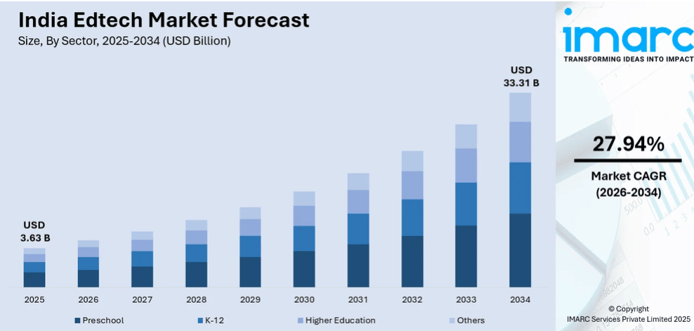
India’s Edtech market is estimated to hit $30 Billion by 2030. India has no famine of data to aid this growth of EdTech companies due to the hoard of exams, NEET, JEE, board exams, conducted here.
A recent dangerous development in this field is an Ai technology known as, Personalised Adaptive Learning (PAL). It is a platform designed to provide personalized tailor-made learning material to individual students and tests their abilities in a gamified manner like SAFAL but in small scale everyday classrooms. Notably, each student gets different materials and questions based on their learning level, passing which they may move forward while failed students still stay with the same concept.
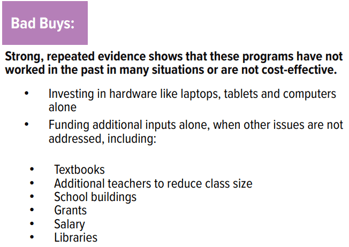
Various Ed-tech platforms and coaching centers across the globe offer PAL services and the advent of AI has made it an important tool in the education market. Considering the AI integrated models are in its latent stage, India is a great place to experiment and enhance these platforms. Notably, in Rajasthan, Andhra Pradesh, Madhya Pradesh, Uttar Pradesh and Assam there have been multiple projects at work. Tamil Nadu Education Minister Rajmohan has also announced the launch of its PAL platforms for school education, higher education and upskilling.
The company, ConveGenius AI is testing its PAL Ai in many government schools and has now grown manifold, increasing its student userbase to over 40 lakhs students and 15000+ schools.
The more these platforms are used the more data is collected to improve these platforms for the future. These platforms are promoted as socially conscious tech solutions to compensate for the inequalities in the education system. Ridiculous! This is just a band-aid on a bullet-wound. Apparently, they will solve the learning gaps in the classroom without addressing the crumbling public education infrastructure.
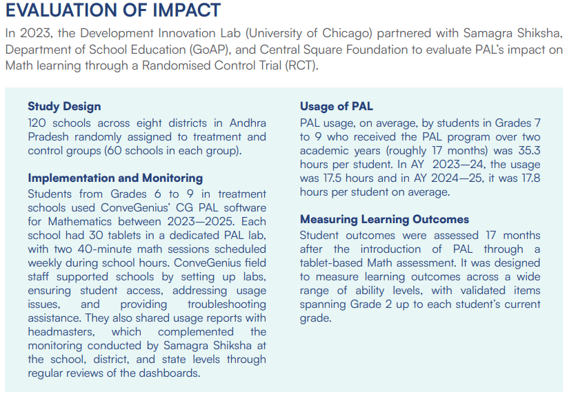
In a report called ‘Cost effective ways to improve global learning” the Global Education Evidence Advisory Panel (GEEAP) set up by the World Bank came up with classification of educational investment into ‘great’, ‘good’ and ‘bad’ buys. Under ‘bad buy’ is listed – Textbooks, Libraries, More teachers, anyone’s Salary, School Buildings. Therefore, any investment into public infrastructure is a ‘bad buy’ but investing into Personalised Learning is listed as a ‘good buy’. This clearly shows that PAL is brought in as an alternative to good teachers, textbooks, school buildings.
From digital evaluations to PAL, all edtech companies are trying to uproot the basis of education system i.e., the teachers! They thirst to profit from the destruction of the already crumbling education system. PAL joins the long line of measures to replace teachers such as through contractualization of teachers, NGO “educators”.
We could even go to the extent of saying that these platforms are like a cost-effective model schools/PMSHRI schools in carefully cherry-picking the ‘qualified’ students and skill them up for the market.
Data Centers’ profiting from Student data
From data production (data collection, data pre-processing) to data consumption (data processing, data displaying), every step is done in order to create more avenues and opportunities for the capitalists. The private companies such as Google, Amazon, Microsoft (GAM) that provide the hardware technology that aids in all this i.e., cloud computing services, gains the most profit out of all this.
Cloud computing is the delivery of computing infrastructure to process, compute, store, network over the internet as on-demand and dynamically scalable. The computing infrastructure provided by Cloud computing is nothing but a datacenter set up with servers (CPU, RAM, GPU), storage (SSD, HDD, storage array), Networking (switches, routers, fiber optic cables) and other facilities in a remote location that allocates resources if you pay a subscription fee (with 18% GST) in order to run your software, instead of buying your own server for that purpose. Currently, almost all software applications (not just Ai) use cloud computing services.
Let us trace the journey of this data to understand why cloud companies may benefit the most. The SAFAL exam, for example, collects children’s answers digitally. These answers are stored in the cloud, as is the SAFAL software itself—including its code, processing systems, and calculations.
The data then moves among multiple stakeholders. Private data-processing companies use it to generate analytical reports through cloud-based software. Quasi-State bodies such as PARAKH use those reports to inform policy decisions, while schools and NGOs use them to guide their actions. At each stage, these stakeholders rely on software and infrastructure hosted in the cloud. Ultimately, the data returns to cloud storage. In this sense, the data has been in the hands of the cloud companies more than it was ever in the State’s.
In the previous sections we see the various Indian companies profiting out of the NEP’s policies, but by simply tracing the journey of data, we can clearly see that most profits are made by these tech giants. This shows us exactly where the loyalty of the Indian state and the local capitalists lie. In a given instance, it may not even support its close buddies like Tata and Ambani if there is an opportunity to provide more profit to imperial capitalists, which is what happened in the CBSE scandal too. They chose CoEmpt over Tata, since Tata has their own on-prem servers but CoEmpt uses AWS.
It is conclusive that, the lofty ambitions of the digitalisation of education are, to sell our children’s and students’ data to imperialist corporations for pennies, to produce skilled wage slaves for them, and every electoral party and the ruling class to squabble over the scraps generated by this service. Those masking as the crusaders of India’s national growth, well-being, security are the actual anti-nationals who are submitting India under the feet of imperialists!


